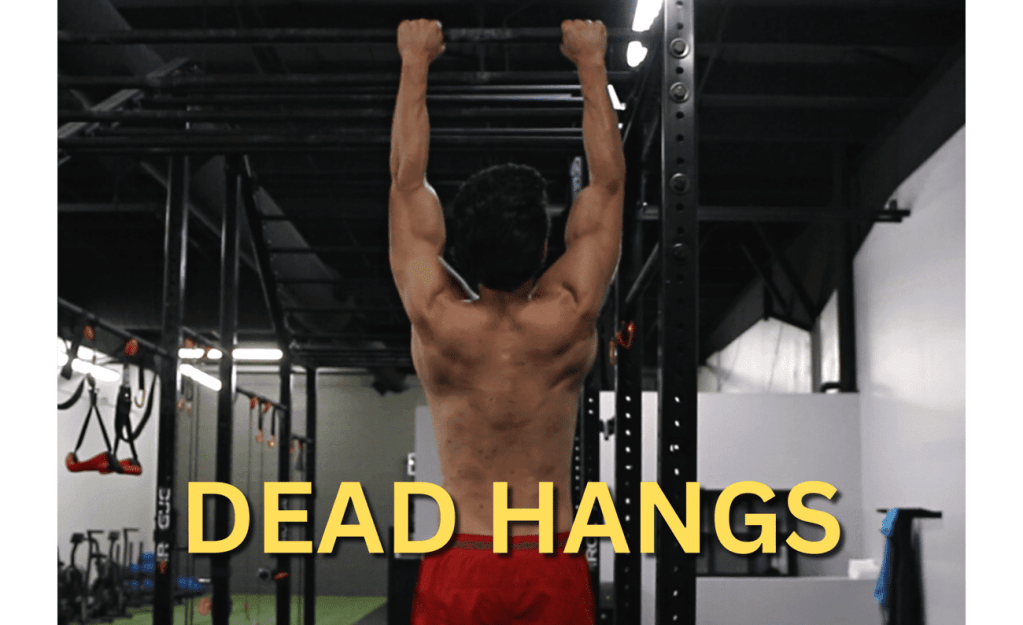
The dead hang may be the single most beneficial functional exercise for you to perform on a consistent basis! It for sure is for the upper body at the very least.
Most people only think of it as a way to improve grip strength… but dead hangs also:
- Decompress the spine, and replace space that has been lost between your bones, joints, and discs in your back.
- Relieve and rehab lower back pain.
- Improve posture.
- Improve shoulder mobility, stability, and flexibility.
- Stretch numerous muscles, including almost all the arm, shoulder, and back muscles.
- Indirectly decrease all-cause mortality (in other words, help you live longer!).
And it does improve grip strength, which itself is more important than you think! Not only does it allow you to lift more weight and increase the strength of almost ALL the OTHER upper body muscles due to Muscular Irradiation (see this module if you have an All-Access Membership for more on Muscular Irradiation)… but studies also show grip strength is directly correlated with decreases in “all-cause death, cardiovascular death, and cardiovascular disease” and even the prevalence of diabetes, along with yet other conditions, diseases, and injuries!
However, not all dead hangs are the same! And it’s absolutely essential that you include VARIETY in the type of dead hang you perform. Here are several different options:
1. The “standard” dead hang is performed with your arms elevated straight up, so that your hands are shoulder-width apart. Then you simply leg your body hang there while keeping your head facing forward or down (NOT looking up at your hands, which is the tendency), and without arching your lower back.
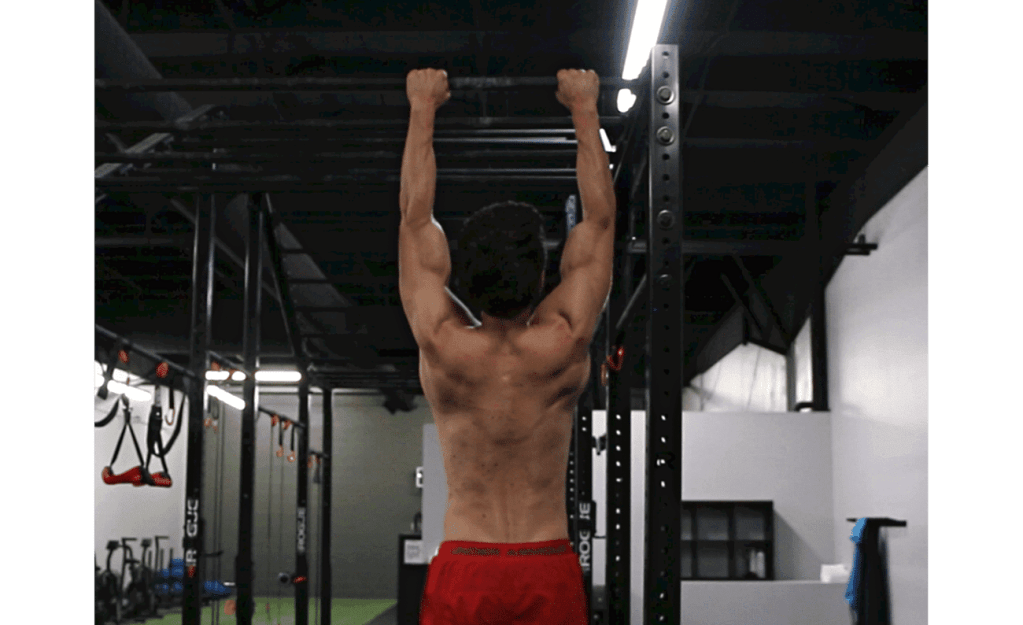
2. The wide-grip dead hang – as the name suggests – is performed the same way but with your hands spread out wider so that your arms extend up and out at an angle. This lessens the amount of stretch in the shoulders and lats, and can be easier to maintain good form.
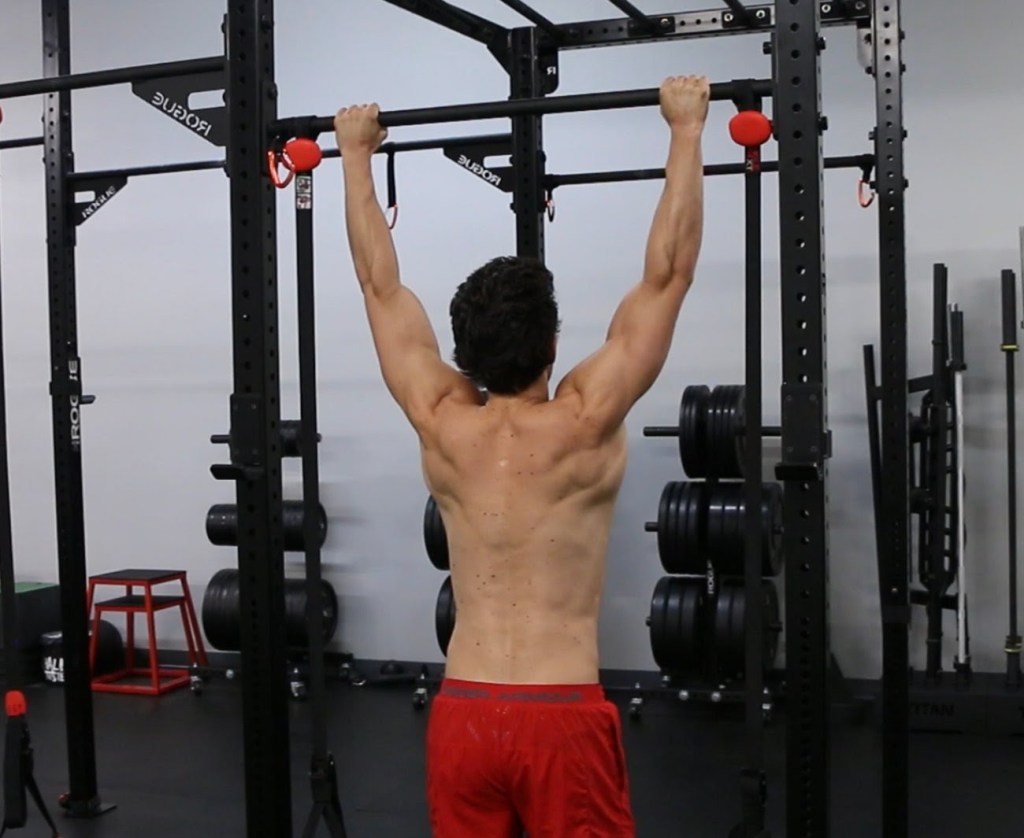
3. The neutral-grip dead hang is performed on parallel bars so that your palms are facing in towards each other. This variation allows the shoulder to open up more, making it easier on those with impingements. You can also use gymnastic-type rings to get into this same position.
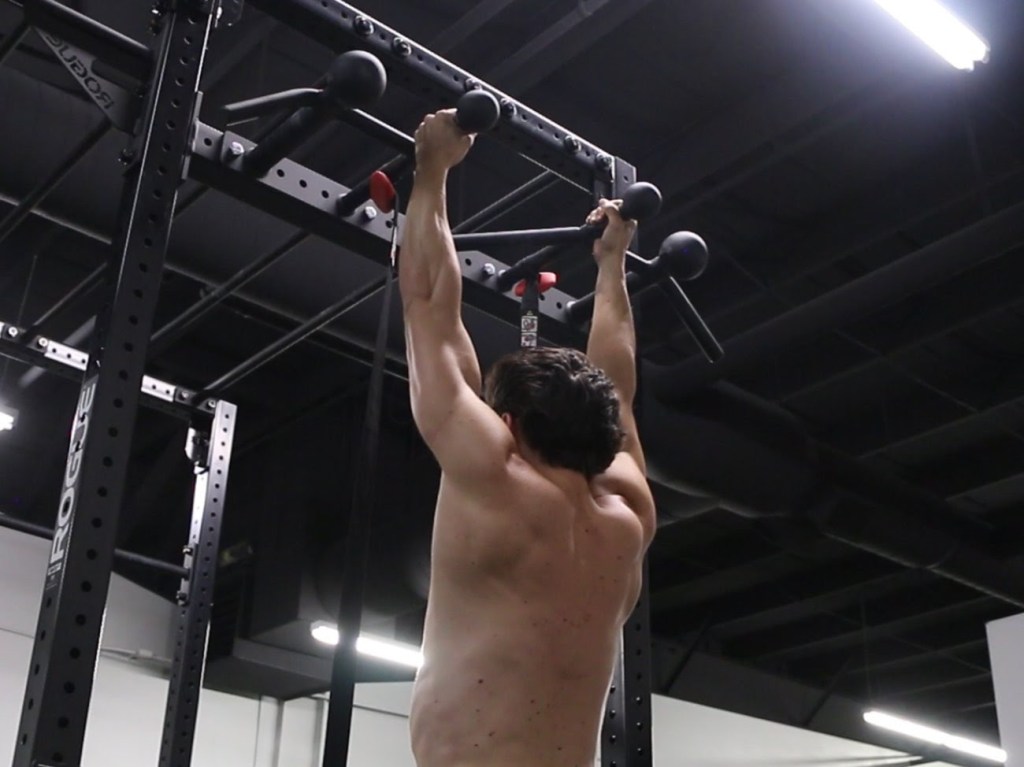
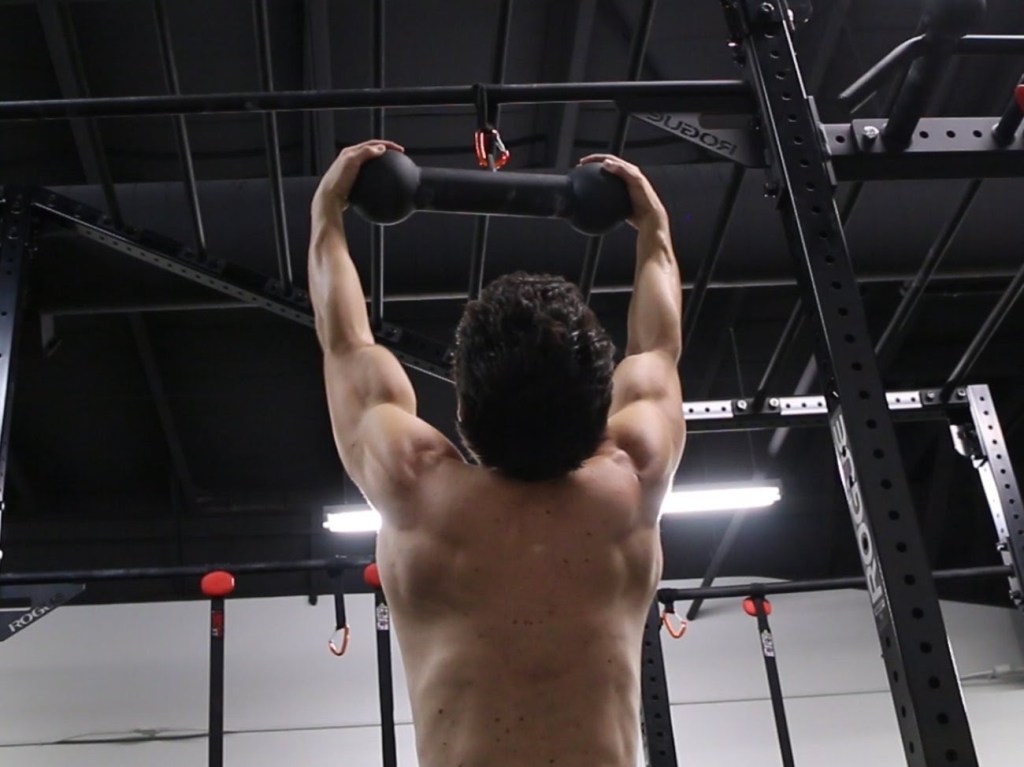
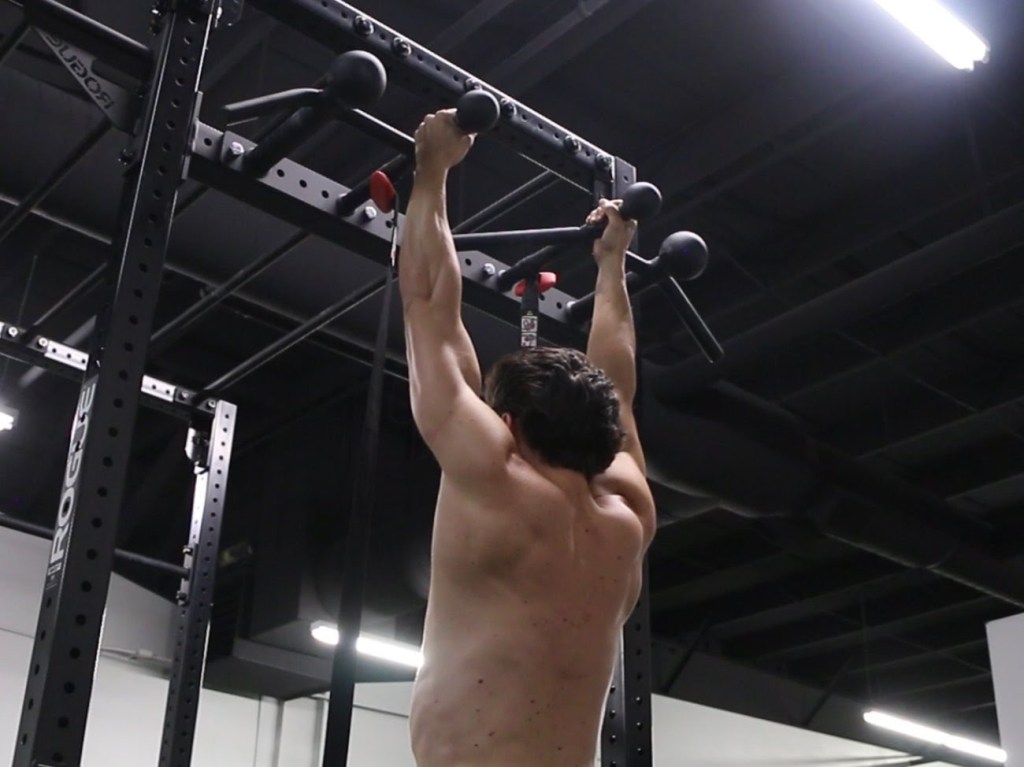
4. Hanging from something that you can’t fully wrap your fingers around – like this ball attachment – significantly increases how much your forearms have to work during the hang!
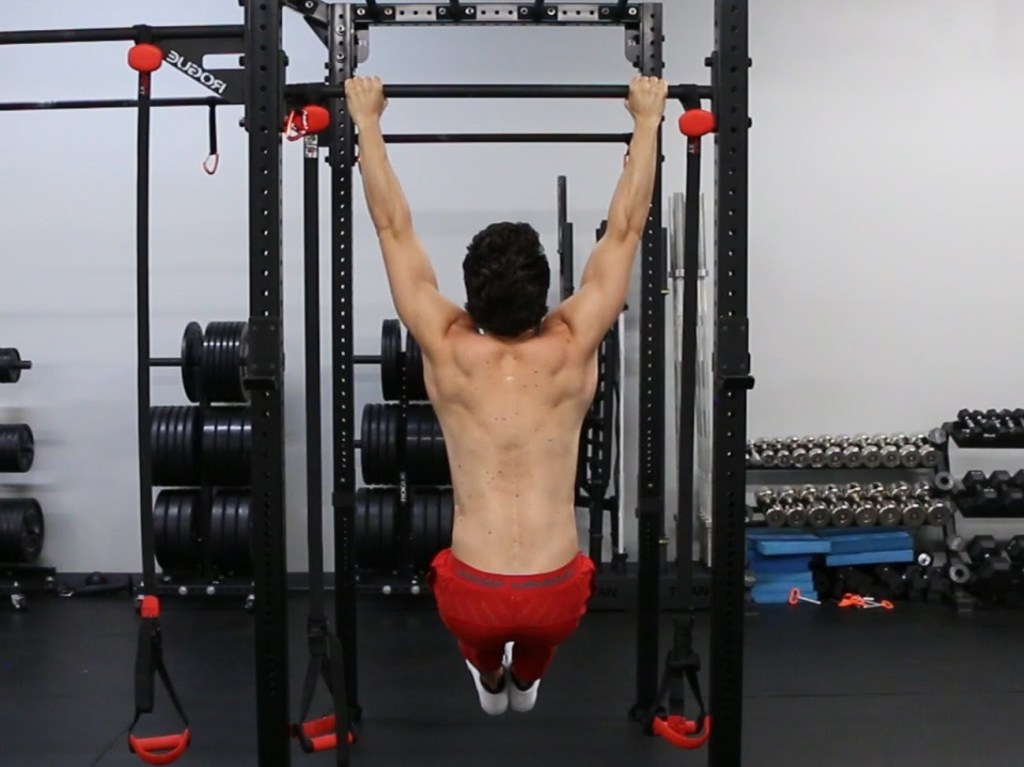
5. L-Sit Hangs are great to do if you have a hard time keeping your lower back from arching, since it puts your pelvis into a posteriorly tilted position (making it harder to arch your back at the same time), and you get some simultaneous hip flexor and core work in!
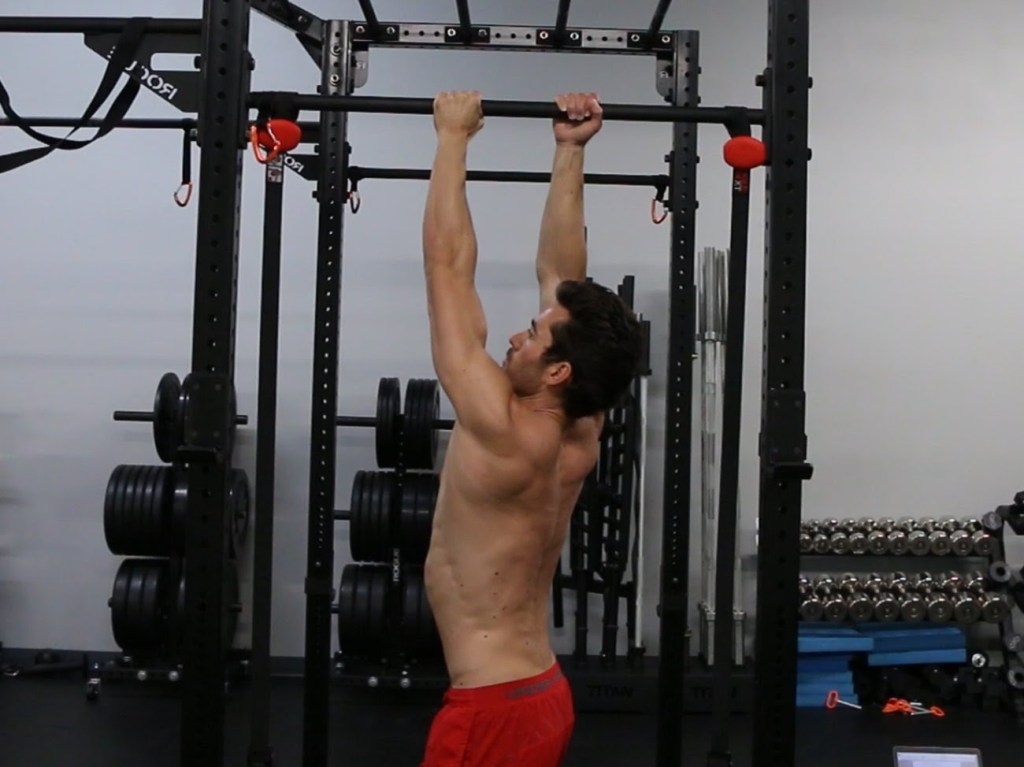
6. Dead hangs with an alternating over / under grip are great if your grip strength is limiting you in the other variations, because you have more leverage with an asymmetric grip.
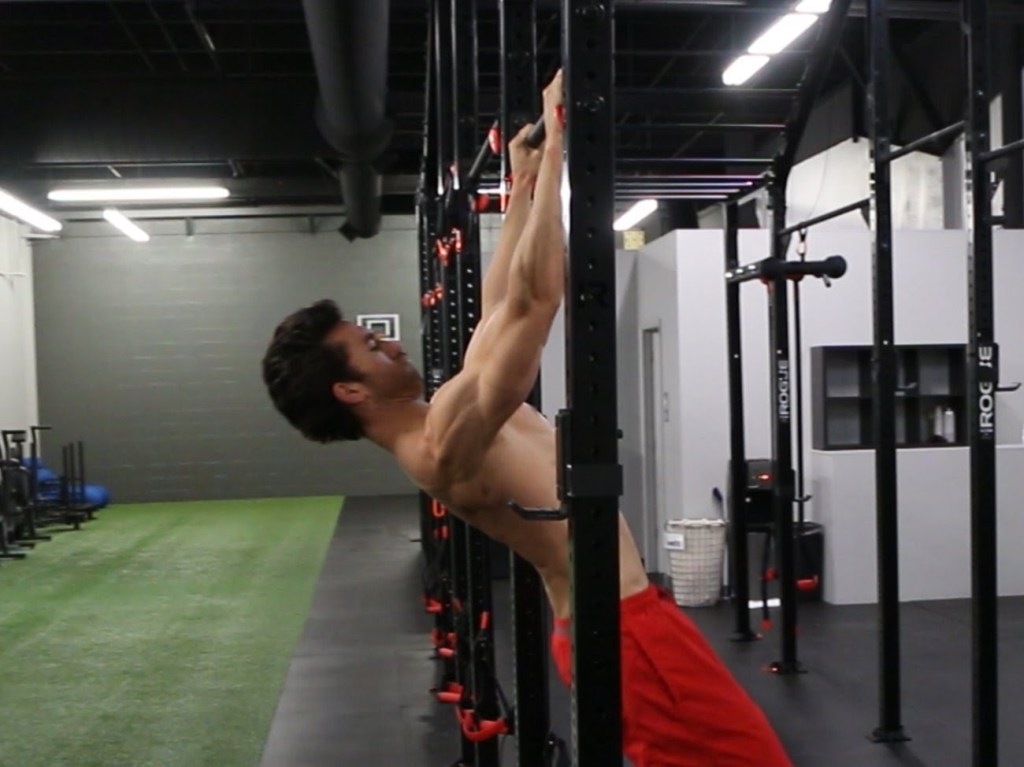
7. Retracted hangs, where you retract you scapulae and hold your body in a backwards-rotate position like you see below, are particularly good for shoulder health and mobility, and don’t require the same degree of overhead range of motion that the others do!
8. If your primary goal during a dead hang are the benefits OTHER than grip strength, then you should use wrist straps to hold your hands in place, as shown below. That way your grip strength won’t be the limiting factor in how long you can hang for. (See the “Relevant Products” section below for my recommendation if you don’t have wrist straps.)
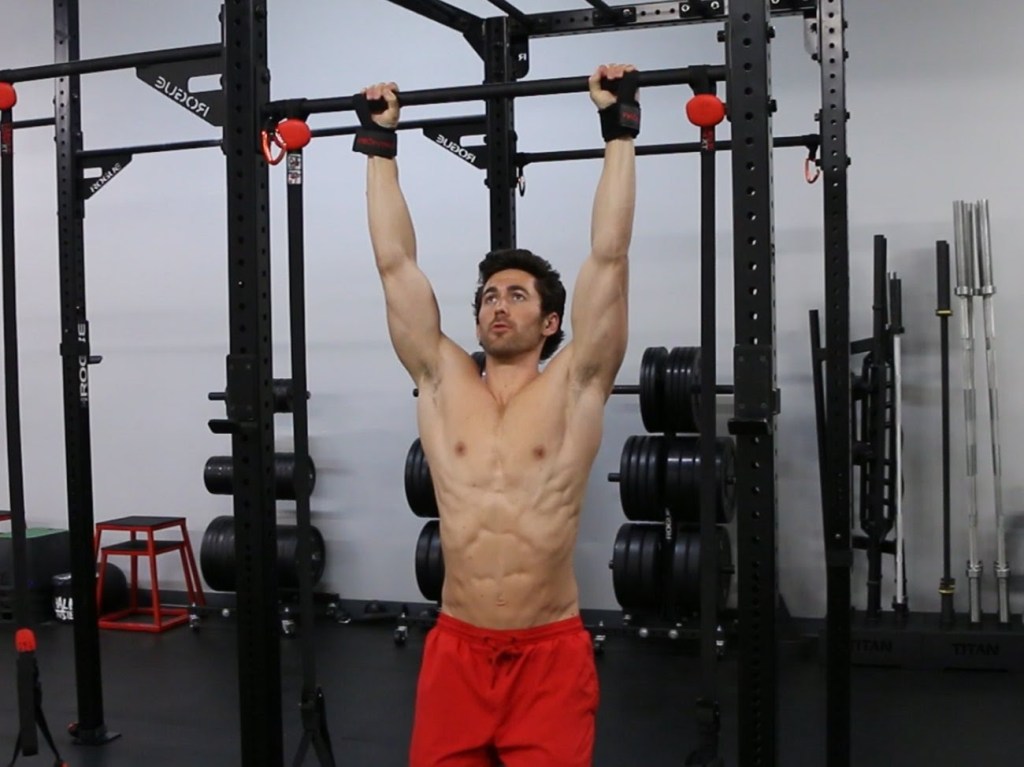
9. Finally if the full weight of your body is too much for you to take, you can loop a resistance band around your knees or feet. You could also use a bench or chair to take off some weight until you’re able to hang without them.
There is no specific time that you should hang for… although generally speaking the longer the better. You can do it before, during, or after a workout (although if you’re working your biceps, forearms, or back on that day, do it after). And unlike most exercises, this is something you can do EVERY DAY! And I highly recommend doing it at least 3X a week to reap the incredible benefits it will provide!!
Application: Start doing dead hangs at least 3 times a week, using multiple different variations!!!
 Dr. Gains
Leave a comment