I’m currently doing a Fitness-Tip Friday mini-series where I highlight the relatively small number of muscles that have a large majority of either fast-twitch or slow-twitch muscle fibers (most muscles have a fairly even split), and therefore need to be worked accordingly in order to get the best results from your training! (Note: If you just subscribed and want to view the whole series, a catalogue of all previous FTF tips is included in the All-Access Basic Membership)
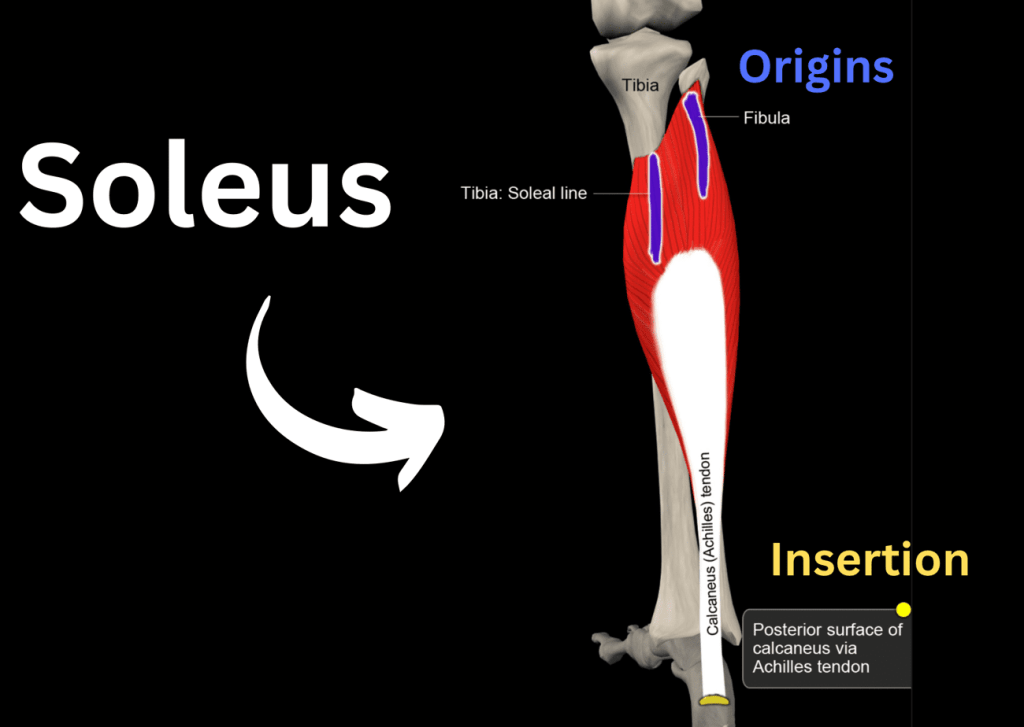
Even though I featured this muscle in a different FTF tip just a few months ago… it would simply be negligent of me to do this series without highlighting the muscle that has the HIGHEST percentage of Type I “slow-twitch” muscle fibers of any muscle in the body – the SOLEUS!!
Our calves are comprised of two primary muscles. The gastrocnemius, which is closer to the surface and provides the U-shape calf DEFINITION… and the soleus, which sits underneath the gastrocnemius, and – if properly developed – contributes significantly to the VOLUME of the calves.
The soleus is also made up by a whopping 85% – 88% of slow-twitch muscle fibers!! (The percentage is even higher in long distance runners, since over the years their body has converted many of the Type II fibers to Type I as well!)
As a result, it’s absolutely essential that you work the soleus in a way that effectively activates those slow-twitch fibers if you want to see real results!
Not only is that important for calf growth… but as I detailed in a previous FTF Tip (Week 61), recent studies have discovered that properly activating the soleus can raise whole-body fat metabolism by an unbelievable 200% -300%!! (Despite only making up 1% of the body’s total weight)

So how exactly do you go about doing this??
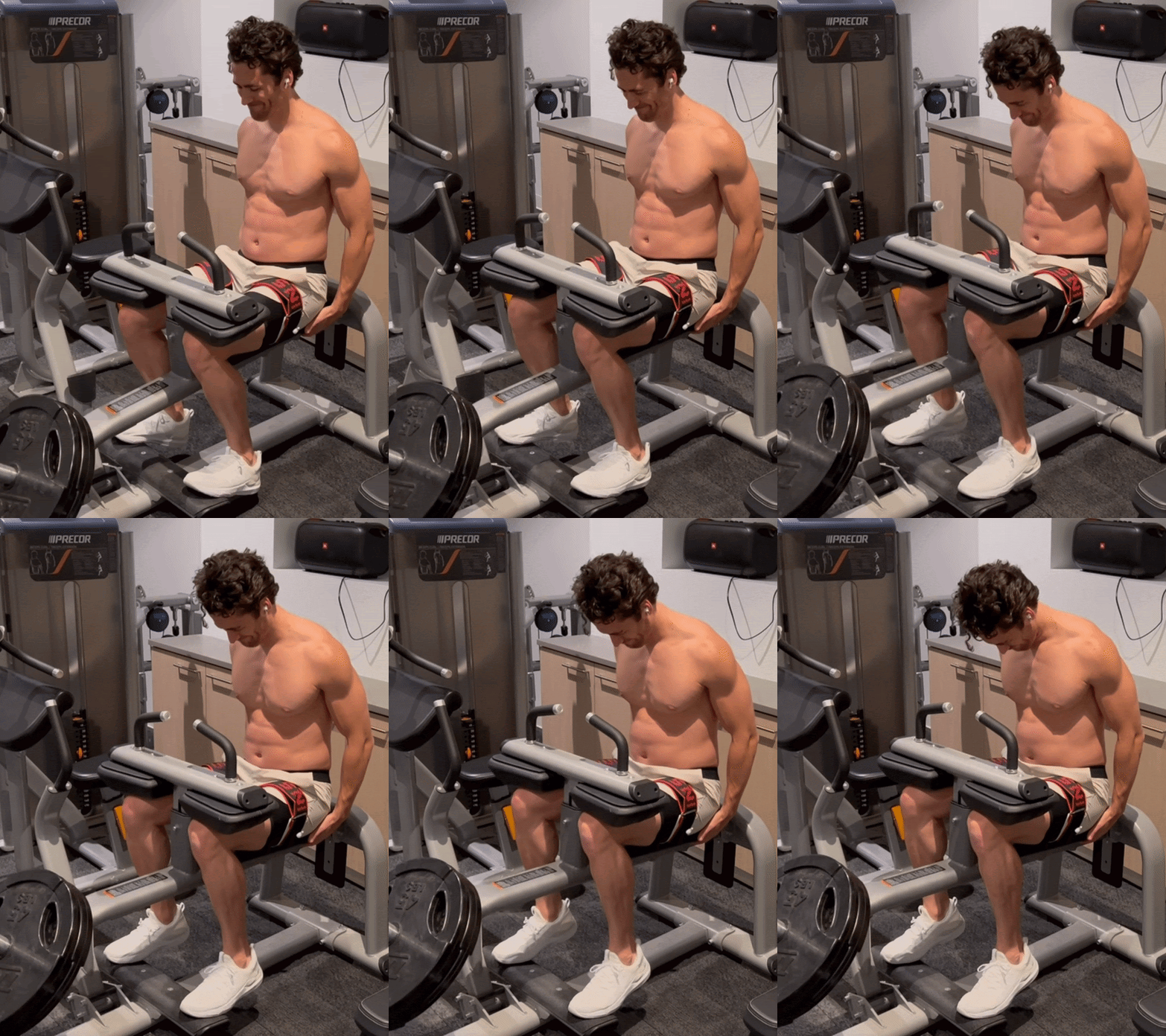
First, you work the soleus by performing calf raises while your knees are bent to at least 90 degrees, because that positioning puts the gastrocnemius into active insufficiency… leaving all the load for the soleus (see GIFS below for some examples).
Then, since the soleus is slow-twitch dominant, you need to do those calf raises with LOW weight… HIGH volume… and SLOW contractions!!
To be specific, you should use less than 70% of your one rep maximum for whatever exercise you’re performing… perform at least 3 sets of 20+ reps… and each phase of each contraction (both concentric and eccentric) should last at least 4 seconds!!
Here are 2 different techniques you can use to effectively hit the soleus (one for if you have access to a bent-knee calf raise machine, and the other if you don’t):
GIF #1 – Sitting Calf Raise Machine
GIF #2 – Sitting Barbell Calf Raise

Application: Make sure to work your soleus, and do so with LIGHT weight, HIGH volume, and SLOW contractions!!
Side Note: It may interest you to know that fiber type composition is NOT uniform throughout a muscle! Different regions can and do have different percentages of each fiber type, and those differences can sometimes be drastic. This is another thing that contributes to the Regional Hypertrophy phenomenon that I’ve been emphasizing in my recent YouTube videos!
For example, the soleus actually has the highest percentage of Type I fibers in its proximal (upper) region… so doing this fiber type-specific training will preferentially engage the upper calves slightly more than the lower!
Relevant Research Article(s):
1) A potent physiological method to magnify and sustain soleus oxidative metabolism improves glucose and lipid regulation
2) Resistance exercise elicits fiber type-specific changes
Related Dr. Gains YouTube Video(s):
1) The Soleus Secret (The Anatomy behind Calf Definition and Volume)
2) You’re Training (All 7) Quads WRONG! NEW Regional Growth Science: VMO / Upper / Lower / Inner Quads
 Dr. Gains
Leave a comment