

In preparation for the New Year I’ve been doing a 3-part Fitness-Tip Friday mini series where I give you powerful neuroscience-based strategies for hacking into various pathways of your brain in order to successfully set and achieve your fitness goals, WITHOUT requiring any additional willpower… and today I’ll be giving the final hack! (If you just subscribed and want to read the previous two hacks – which explain how to use “Subconscious Priming” and the “Endowment Effect” – a full catalogue of all previous FTF tips is included in the All-Access Basic Membership).
Today’s hack is far more simple than the previous strategies I’ve given you… yet perhaps the most important of all, because if you DON’T do this right the rest won’t be anywhere near as effective. Yet if you DO, it will supercharge every other strategy you use!
Part of the Brain Hacked:
-Amygdala
How It Works:
When it comes to setting goals, you’ve no doubt been given the advice before to “make it realistic”, or “start small”, or something similar. Even the “A” in the SMART goal-setting method acronym is “Achievable”, which can convey the same idea.
Well, that idea is WRONG!!!
The truth? With the way our brains work… paradoxically the HARDER or more challenging a goal is, the MORE LIKELY we are to achieve it!!
Numerous studies have shown that there is a direct, linear relationship between the difficulty of a goal and the likelihood of it being achieved.

For example, in one study researchers gave 80 households a goal to decrease their electricity consumption during the summer. However, half of them were given the goal to decrease their consumption by 2% (easy goal). while the other half were given the goal to decrease their consumption by 20% (difficult goal).
At the end of the study, the households given the 20% goal had decreased their consumption by an average of 19.1% through the summer… while the households given the “easy” 2% goal hadn’t decreased their consumption AT ALL!!
How does that happen??
Well, it hearkens back to the amygdala, an area deep in the brain (which we touched on with Hack #1) that subconsciously controls our emotions and how we react to them. If a goal isn’t challenging enough, it doesn’t create the emotional impact necessary for the amygdala to generate the subconscious motivation for us to pursue and achieve it!
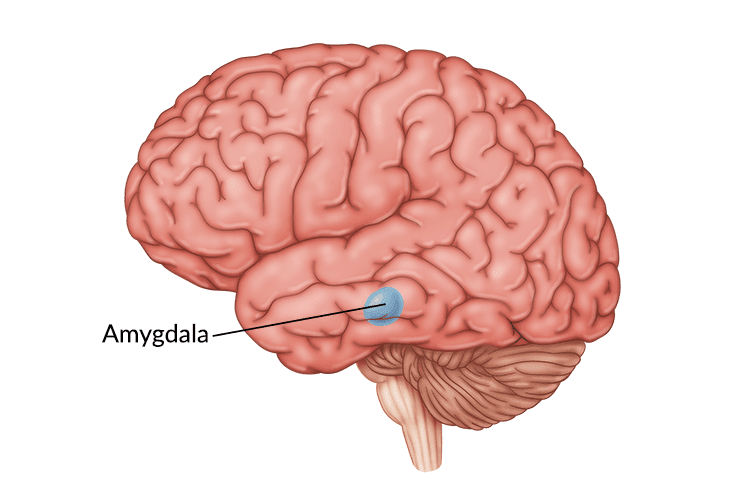
The truth about “easy”, “realistic” goals is that we simply don’t want them enough to undergo the conscious and subconscious changes necessary to achieve them. Of course, it has to be humanly possible to achieve your goal… which is where “Achievable” comes into play. But hopefully you get the idea. But don’t mistake “achievable” and “realistic” with “easy”! Even a goal that’s humanly IM-possible, but that you believe in and want with all your heart, will be far better and yield many times more results than one that’s easy!
Application: As you set your fitness goal for 2024, be sure to choose a CHALLENGING goal that you TRULY want to achieve! Not what you think is “realistic”… but what you actually WANT. Only that will have the power and emotional impact to light up the amygdala, getting it to open new pathways in your brain dedicated to achieving the goal!
Relevant Research Article(s):
1) Joint effect of feedback and goal setting on performance: A field study of residential energy conservation.
2) Self-regulation through goal setting
Related Dr. Gains YouTube Video(s):
1) 13 Neuroscience-Based Brain Hacks for Setting & ACHIEVING Your Health & Fitness Goals! (Part 1)
2) 13 Neuroscience-Based Brain Hacks for Setting & ACHIEVING Your Health & Fitness Goals! (Part 2)
 Dr. Gains
Leave a comment