
(Note: This will be quite a bit longer than my normal FTF tips… but it’s something I’m passionate about and can be life-changing if applied correctly, so it’s worth the extra time to read through!)

In preparation for the New Year I’m doing a 3-part Fitness-Tip Friday mini series where I give you powerful neuroscience-based strategies for hacking into various pathways of your brain in order to successfully set and achieve your fitness goals, WITHOUT requiring any additional willpower!
Last week we went over a simple but extremely effective strategy that creates “Subconscious Priming via Visual Fixation” by hacking into the visual cortex and amygdala (if you just subscribed and want to read that, a full catalogue of all previous FTF tips is included in the All-Access Basic Membership).
This week I’ll be giving you a strategy that combines 2 different “brain hacks” to create a fail-proof system that, if you actually put into practice, I promise will get you to your goal! (There’s actually a 3rd hack built into the system, which I’ll briefly touch on at the end)
And if some of it sounds weird or ridiculous at the beginning… just keep reading, and you’ll see how solid the science is behind it!
HACK #2 – Endowment Effect + Loss Aversion!
Parts of the Brain Hacked:
-Substantia Nigra (Loss Aversion)
-Medial Pre-Frontal Cortex (Endowment Effect)
What To Do:
-This hack has two parts, and each takes advantage of a different aspect of how your brain functions.
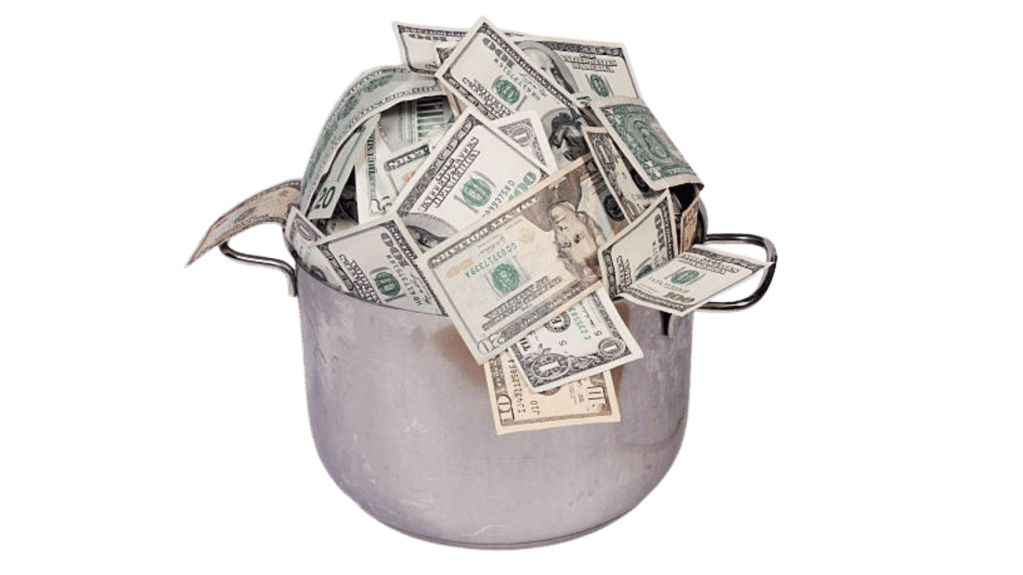
1) Give yourself an amount of your own money as your “reward” for having achieved your goal. (If you have someone who will give it to you, even better… but that’s not a realistic possibility for everyone, and giving it to yourself will trigger the same neurology if you do it the way I’m explaining). It needs to be a significant enough amount to evoke a lot of emotion… but not so large that it would ruin you if lost. I’ll use $1,000 as an example. If you are rewarding yourself, it’s important that you actually move the money somewhere. Ideally cashed out and placed in a prize pot saying “YOU DID IT!”. But if that’s not realistic, at least transfer it into a separate account. The important part here is that you are behaving as if you’ve ALREADY ACHIEVED YOUR GOAL!
2) Tell a family member or friend of your goal, and what specific behaviors you’re going to be performing to achieve it (i.e. going to the gym 3 times a week). Then establish a weekly check-in where that friend will follow up with you, and tell them if there’s ever a week that you don’t perform those exact behaviors, you have to give them $100 (or 10% of whatever reward you gave yourself for achieving your goal)! It needs to be someone who actually will follow up without fail… but it shouldn’t be hard to find someone who will take your money 😆. If you have daily behaviors for your goal, even better – you can set up a daily or every other day check-in with smaller penalties. However, it needs to at least be once every week, and the penalty needs to add up to at least 10% of your reward each week! The goal itself also has to be specific, objective, and measurable, so that your friend can verify when you’ve achieved it.
How It Works:
1) While the second part of this hack is the most important… the first part still triggers a powerful psychological effect called the Endowment Effect, which says that we subconsciously place MUCH more importance on something we already have in our possession, than something of equivalent or even larger objective value that we haven’t yet obtained.
In a famous study at Cornell University, researchers separated students into two different groups. In one group, the students were given Cornell mugs from the university bookstore as a gift. Then later on, the researchers offered to trade each student a box of ballpoint pens (also from the bookstore) for the mug. Almost none traded, even though there were price tags still on both items, so students could see the difference in objective value. However, with the other group, the students were initially given the box of ballpoint pens as a gift… then later on, the researchers offered to trade them for the mugs. Almost none of THEM traded either!
So what’s going on here??? Which object is more valuable?
The answer is whichever one they happen to already have!
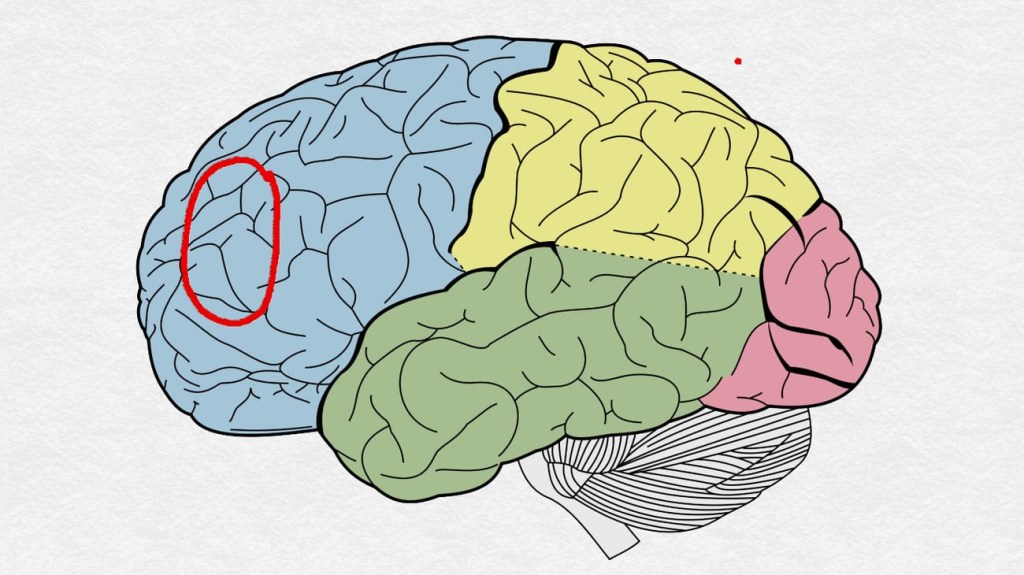
There’s an area of the brain called the medial prefrontal cortex (red circled area in image below) making these students feel that the mug or pens they already have is more precious and valuable than the object they don’t. Then it relays that feeling to other areas of the frontal cortex where we consciously make decisions. This “Endowment Effect” has since been proven to apply to virtually every area of our lives, and plays a huge role in how we make decisions without us consciously realizing it!
And other studies have shown that we don’t even need to actually have possession of whatever it is for the Endowment Effect to take effect… only a reasonable expectation of having it.
So by telling ourselves that we’ve already achieved our goal, and taking actions that reinforce that feeling to our brain, we subconsciously begin to make decisions that are in accordance with that “achieved” state! (You can even further enhance this effect by envisioning yourself as already in possession of your goal during daily meditation, which is a whole separate topic.)
2) As powerful as that is, the second part of this hack leverages a psychological phenomenon that is even MORE powerful – Loss Aversion.
Simply put, human beings will work far harder to avoid losing something than they will to gain something of equivalent or even greater value. For example, you’ll work much harder to avoid losing $10 than you will to gain $10.
In fact, it’s so powerful that most people will even work harder to avoid losing $10 than to gain $50!!! Which, logically, is completely illogical… but nevertheless is how our brains work.
In a 2020 study, researchers randomly separated people into 2 groups, and had entered everyone into a physical effort competition for a significant prize. The competition had multiple rounds requiring the person to maintain 90% of their maximum force output (think one rep max) for a period of time that lengthened with each successive round (think round one = 10 seconds, round two = 20 seconds, etc.)
In one group the participants started with 0 points, and then could EARN 10 points per round they were successful in. The participants in the other group also started at 0, but would LOSE 10 points for every session that they WEREN’T successful in. In the end, the participants who stood to LOSE points maintained significantly HIGHER force outputs, and did so for a significantly LONGER time!
In both groups the prize was the same… and the competition requirements were the same. The only difference was the direction in which the points were counted… which shouldn’t make any difference whatsoever. But that made ALL the difference.
Human beings just hate losing things!!
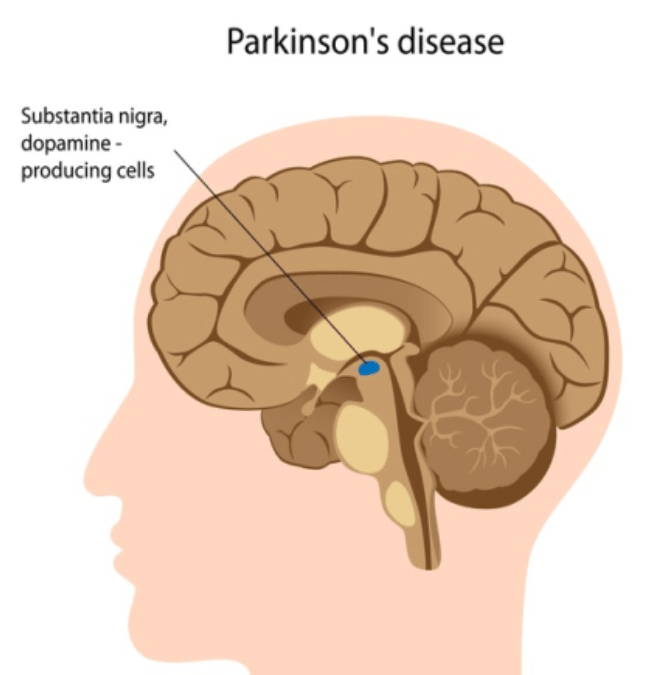
Like many aspects of the brain, it’s not fully understood why the brain functions this way. However, we do know that it’s dopamine-related, and triggered by an area of the brain called the substantia nigra… because people with Parkinson’s Disease (who have damaged substantia nigras), don’t display any loss aversion bias!
It also builds on the Endowment Effect. One of the reasons we hate losing something is because of that powerful sense of possession and the skewed value perspective we have on things that are “ours”.
But regardless of how it works, the important thing is that it does work, is extremely powerful, and you can take advantage of it!
Not only is it much easier to find a friend willing to take $100 from you any time you don’t perform an action than one who will give you $100 every time you do… but it’s FAR more effective. At least 500% more effective to be specific! Without realizing it, you will work MUCH harder towards your goal and be willing to make MORE and BIGGER sacrifices to achieve your goal when you know that you’ll LOSE something that’s already YOURS if you don’t!!
Why 10% per Week?:
In the intro for this tip I mentioned that there’s a 3rd hack built into this strategy… and that’s the 10% per week you would need to give up for not performing the established goal-oriented behaviors.
That’s not a random number. I chose it because the key to long-term success in behavior change is something called Auto-Motive theory. Which, simply put, means that in order to make something a habit, its actions need to be moved from the frontal cortex (where we consciously make the decision to do that action), to the deeper areas of the brain, where we do it unthinkingly. Such as driving to work or brushing your teeth (hopefully). Once that happens, you no longer need any of these hacks or any significant amount of willpower. It’s just something you do. And studies have shown that it takes an average of 66 days (about 10 weeks) of a new action or behavior being repeated and reinforced for it to be offloaded from our frontal cortex and controlled automatically by the deeper areas of our brain.
So in having a significant loss penalty established for those first 10 weeks will be enough for you to no longer need the system in place. Your subconscious will take it from there!!
Application: Reward yourself ~$1,000 (or whatever amount you can afford) UP FRONT for “achieving” your goal, then have a friend commit to taking 10% of it any week you don’t perform ALL the SPECIFIC behaviors established for that goal!!
Relevant Research Article(s):
1) People exert more effort to avoid losses than to obtain gains
2) Experimental Tests of the Endowment Effect and the Coase Theorem
3) Dopamine-Dependent Loss Aversion during Effort-Based Decision-Making
Related Dr. Gains YouTube Video(s):
1) 13 Neuroscience-Based Brain Hacks for Setting & ACHIEVING Your Health & Fitness Goals! (Part 1)
2) 13 Neuroscience-Based Brain Hacks for Setting & ACHIEVING Your Health & Fitness Goals! (Part 2)
 Dr. Gains
Leave a comment