I’m currently doing a Fitness-Tip Friday mini-series where I’m emphasizing a set of muscles that are significantly underrated as far as their overall importance – and therefore underworked by the vast majority of people! So far we’ve gone over the tibialis anterior, serratus anterior, flexor digitorum profundus, sartorius, erector spinae, soleus and the gluteus medius. (Note: if you just subscribed and want to view those, a catalogue of all previous FTF tips is included in the All-Access Basic Membership) And this week’s underrated & underworked muscle is the infraspinatus!!
The infraspinatus is one the four muscles that make up the “rotator cuff”, so is absolutely essential for all shoulder movements… which really means it’s essential for all upper body muscle development, because it’s almost impossible to work any muscle in the upper body without involving your shoulders to at least some degree.
Yet most people completely ignore it, or at least severely under-train it. In fact, in weight lifters it’s usually the weakest of all the rotator cuff muscles… which ultimately creates a shoulder imbalance that over time causes rotator cuff impingements and tears. You can watch this brief (and very old) video I made a long time ago for more details on why and how that works.
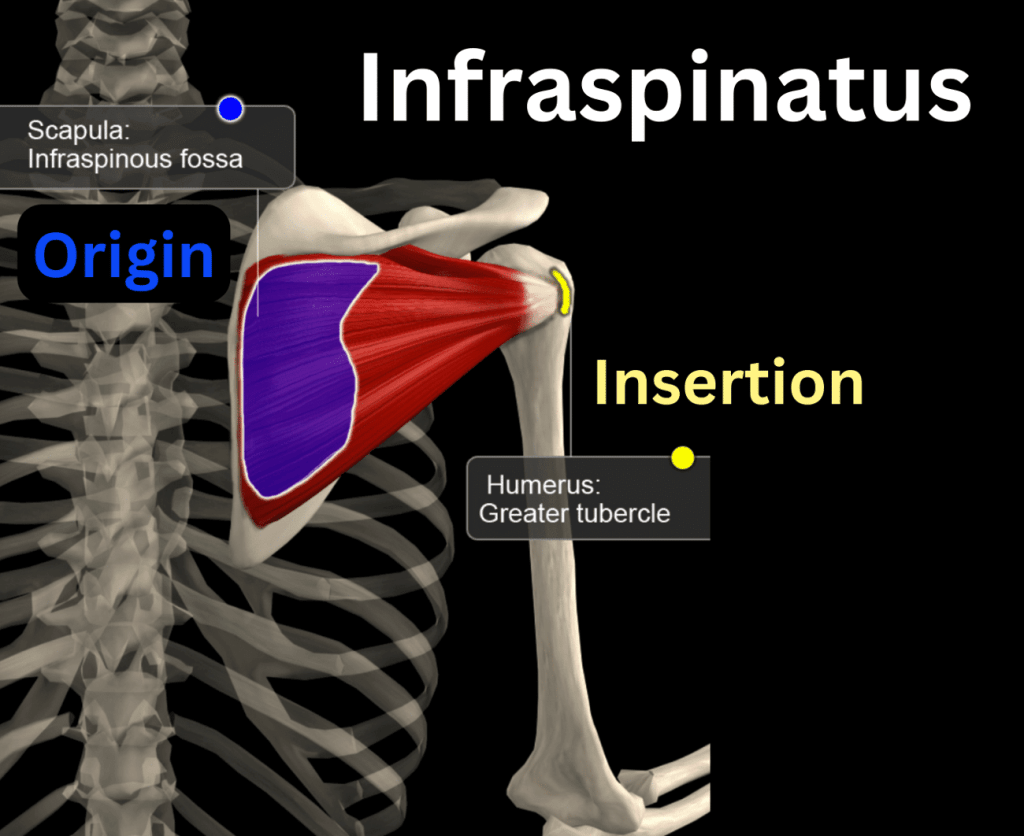
The infraspinatus fibers originate (start) all along the back of the scapula (shoulder blade), and then insert on the outside edge of the head of the humerus (see image above). So when it contracts, it rotates the upper arm backwards… which we call external rotation (click to view).
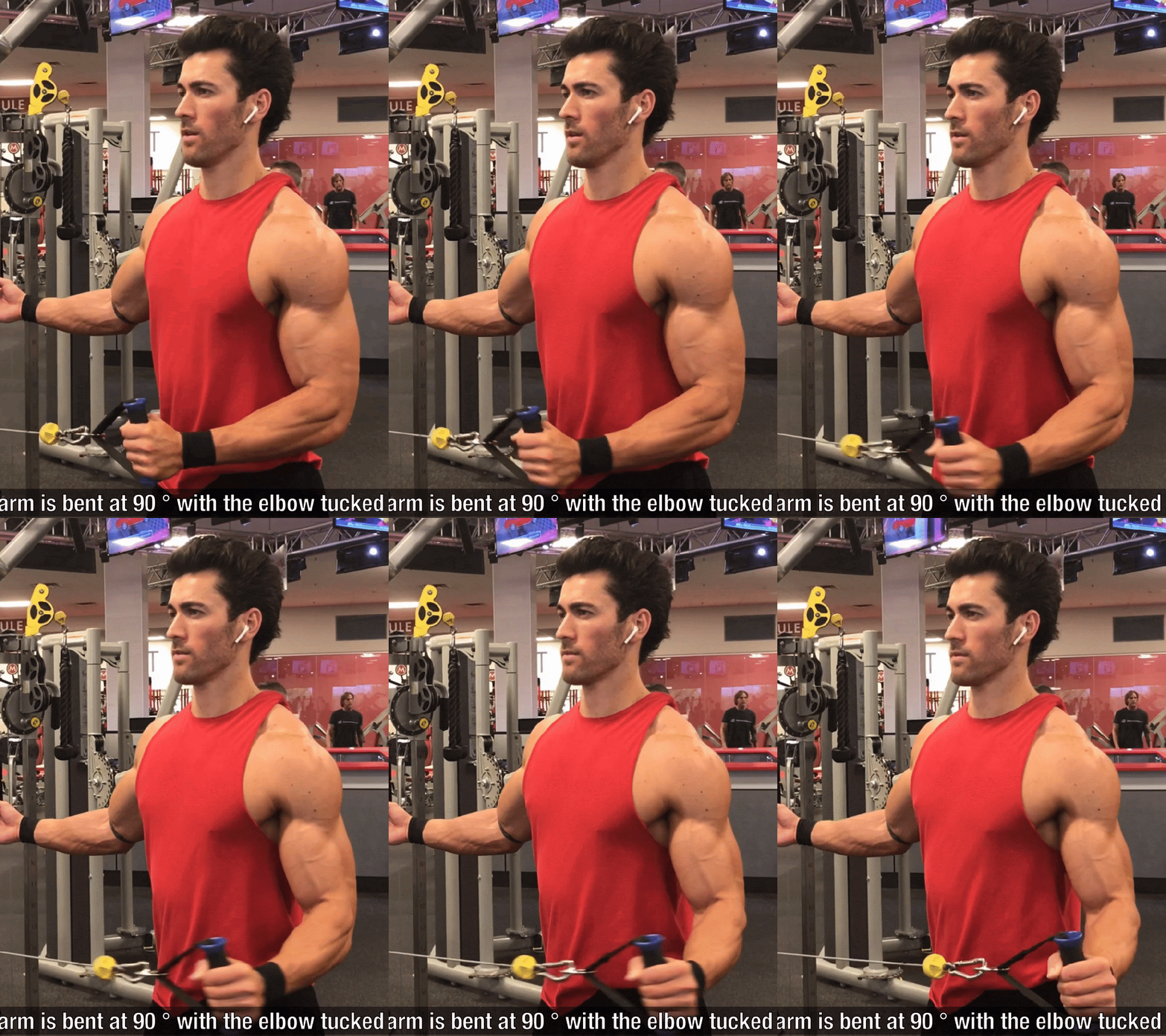
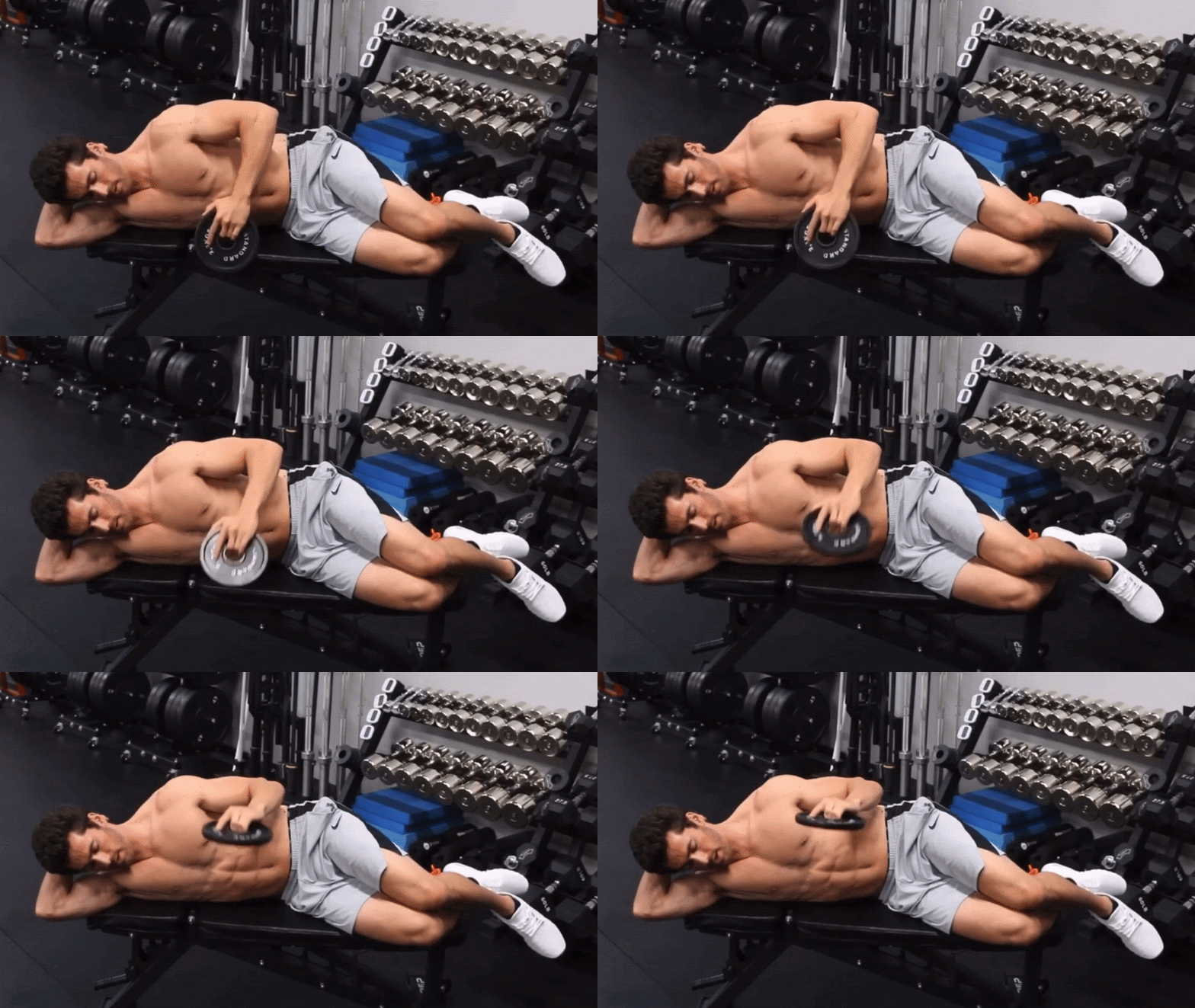
Interestingly, and importantly, the infraspinatus ONLY significantly engaged during external rotation IF your elbow is tucked in to your side (shoulder adducted)! GIFs #1 and #2 below show how you can do that using either a cable machine or free weights!
Note that if you’re using free weights, you CAN’T work this kind of external rotation exercise while standing upright!!! Many people do this anyway, but it’s completely ineffective… because you’re not moving the weight against any resistance. The resistance – gravity – is pulling DOWN, so you’re really only working your biceps and the other elbow flexors. To actually work external rotation with free weights, you have to be lying down! The reason that it works with a cable machine is that the cable creates horizontal resistance, so you can externally rotate against the resistance while standing up.
Consistently working and strengthening the infraspinatus (ideally using a wide variety of exercises) will be one of the two most important things you can do to ensure that you have healthy, balanced shoulders (we’ll go over the second one next week!)… and when you have healthy shoulders, you can more efficiently, effectively, and safely build all your other upper body muscles!
Application: Stop ignoring your infraspinatus and start working it (the right way, with a tucked elbow) at least once a week!! Your future shoulders will thank you!
Relevant Research Article(s):
1) Muscle activity pattern of the shoulder external rotators differs in adduction and abduction: an analysis using positron emission tomography
Related Dr. Gains YouTube Video(s):
1) Why is Shoulder Pain in Lifting So Common??? (Principle of Internal & External Rotation Explained)
GIF #1 – Cable Adducted External-Rotation
GIF #2 – Side-Lying Adducted External-Rotation
 Dr. Gains
Leave a comment