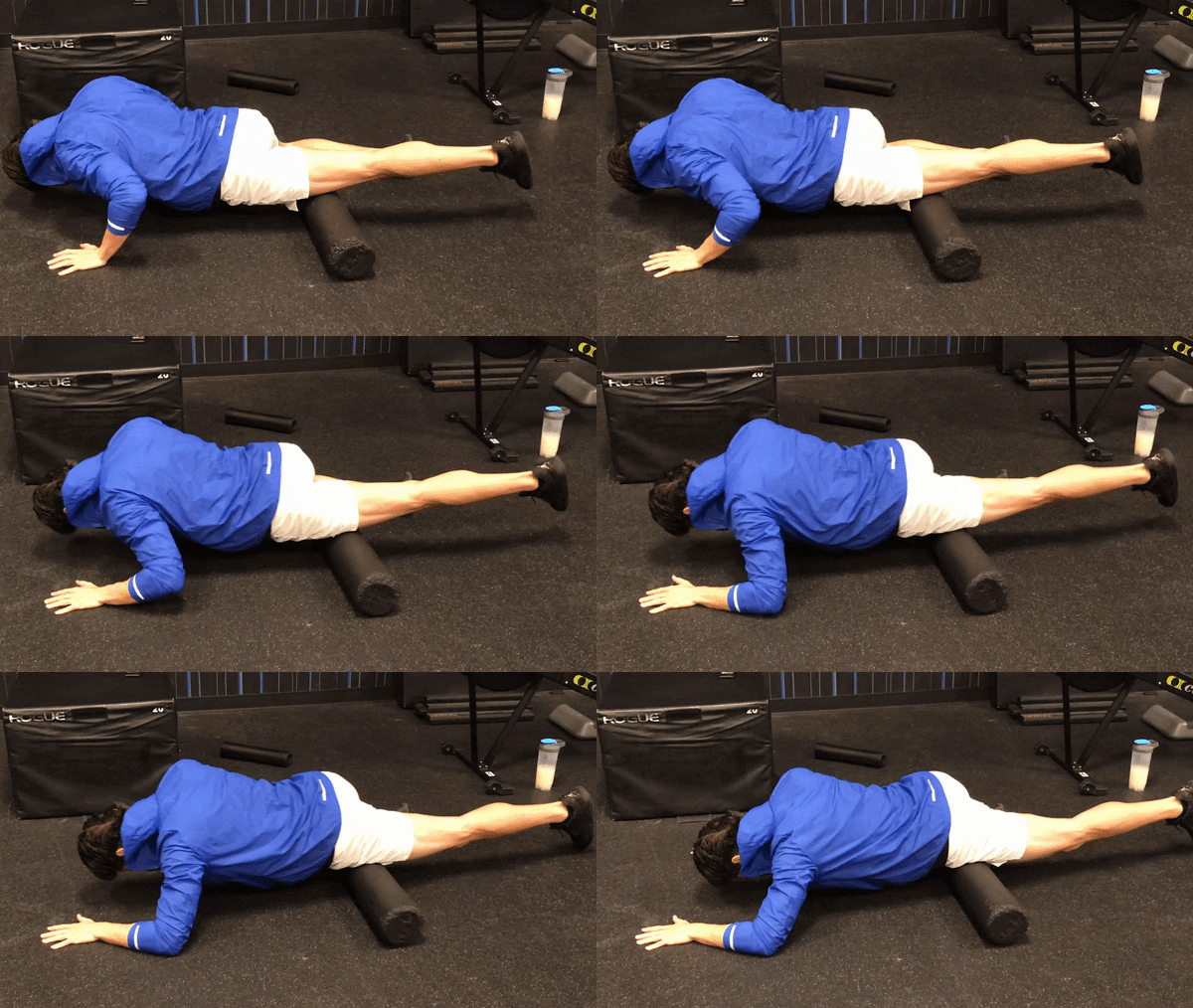
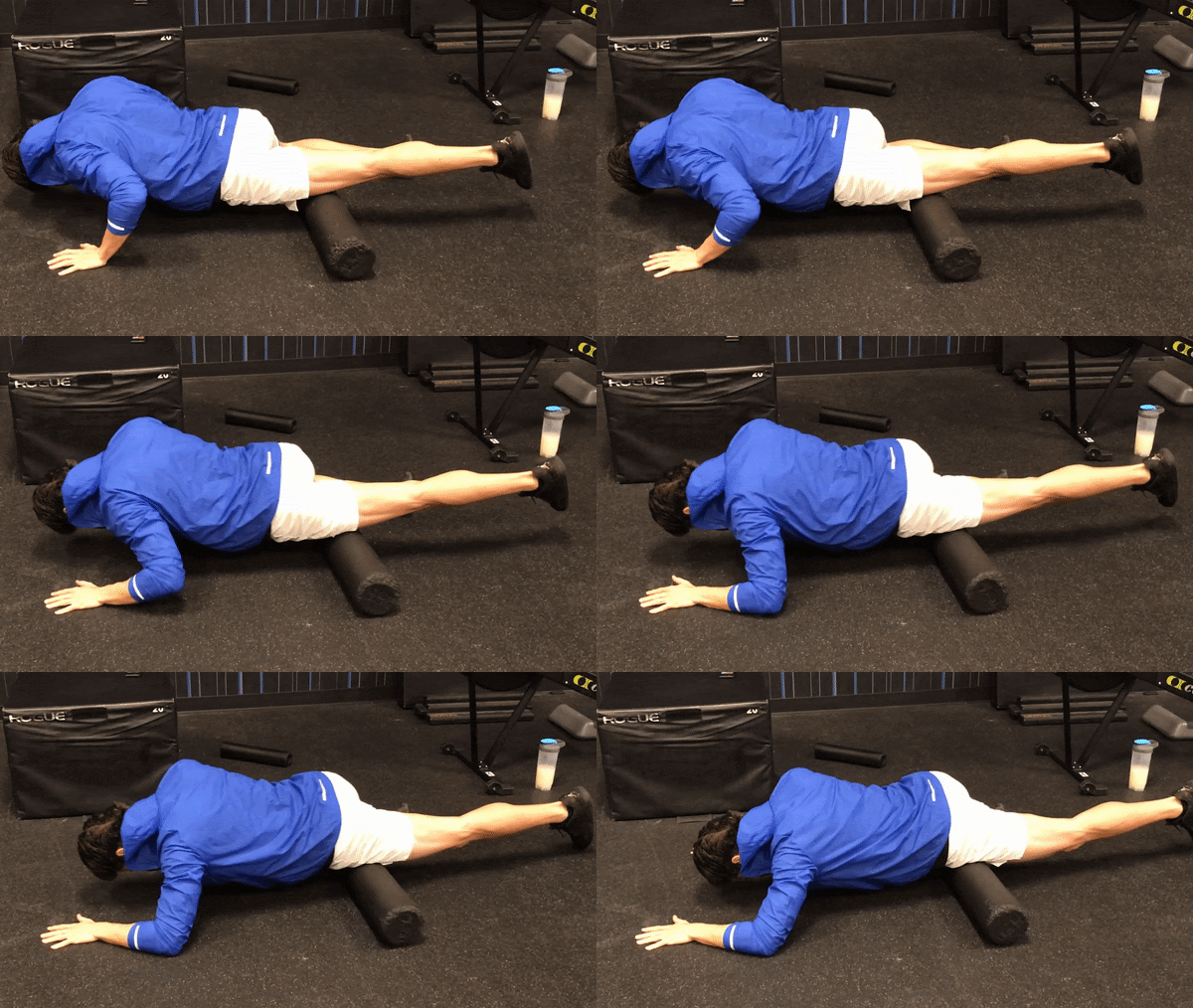
We’ll take a break from the “Underrated & Underworked” mini-series this week in order to answer a set of questions that I often get, and that have important repercussions on your training: Do foam rollers really work?? If so, what are the benefits and when should I use them?”
The answer is YES, they work… but not for all use-cases. Many people try to use the foam rollers for enhanced recovery after a workout, but studies have shown that they provide little to no benefits for that use-case.
Where they DO work, and work exceedingly well, is as a pre-workout method of activating and warming up your muscles!
Foam rolling is really a form of self-administered MYOFASCIAL RELEASE, which is a technique that has been used for decades by physical therapists and massage therapists. It has proven to be effective at relieving pain, increasing flexibility and range of motion, and even healing soft-tissue injuries (which is my Gains Without Pains Series Total Shoulder Programs prominently features myofascial release for all muscles surrounding the shoulder!)
Most importantly for our discussion today is the fact that it does all the above without decreasing muscle strength, power, explosivity, or proprioceptive stability (your brain’s ability to sense where your muscle lies in space).
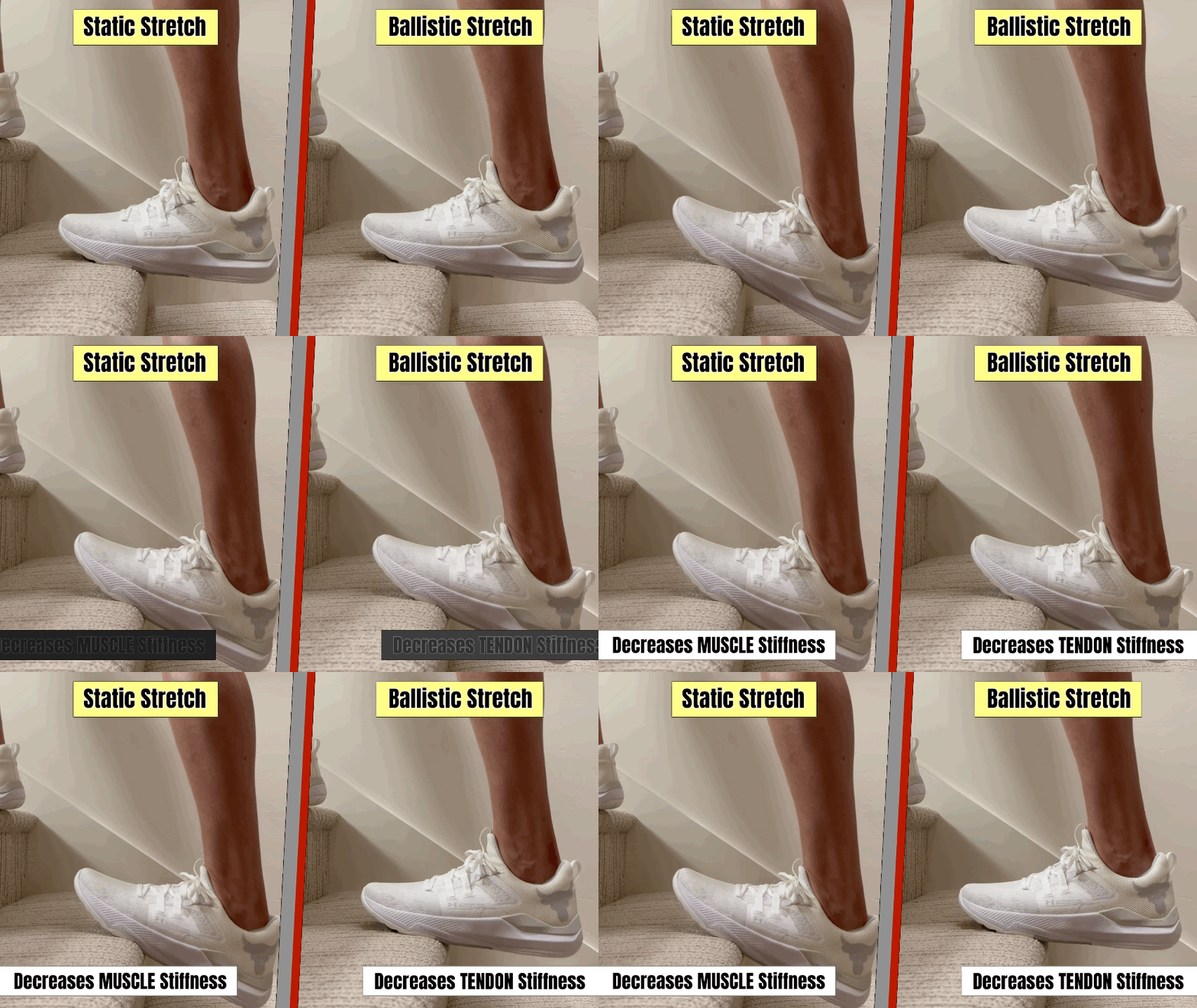
Why is that so important? Well for one, it’s extremely important to warm up your muscles before a workout… but unfortunately many people do so via static stretching (i.e. the classic method of holding a stretch for a set period of time – see GIF #1 below). If you’re one of those, STOP!! Static stretching right before an exercise significantly decreases your muscles power and strength, and also significantly increases the risk of injury! And at least one study has shown that those effects can last for an entire 24 hours after you stretch!
A better warm-up option is to use ballistic stretching (aka “dynamic” – also shown in GIF #1 below), where you “bounce” in and out of a deep stretch. It doesn’t increase flexibility to the same degree that static stretching does… but it does effectively activate the muscle without inhibiting strength or increasing the risk of injury if done right before a workout.
However, the BEST option for a pre-workout warm up is to use myofascial release, which can easily be done with a foam roller!! Studies show that not only does it not inhibit strength, but it actually INCREASES it! And it increases flexibility and range of motion almost as well as static stretching does, without messing up proprioceptive stability, and therefore without increasing the risk of injury! Making it by far the safest and most effective way to activate your muscles before a workout!
And if you’re wondering, using a vibrating foam roller does seem to lend even more benefits than a non-vibrating foam roller – particularly with flexibility. Although an extremely high vibration frequency doesn’t lend any greater benefits than a low vibration roller, so no need to pay extra for high vibration speeds.
And to top it all off, there’s even a way to boost region-specific hypertrophy using foam rollers (or another form of myofascial release) before a workout! The mechanism there is a little too complex to explain here, but I will be going over it in my next YouTube video, which will be on region-specific training of the quads!!
APPLICATION: Use a foam roller to activate and warm up your muscles BEFORE a workout!!
PS: I’m also frequently asked for specific product recommendations, so I created a short list of Myofascial Release Products on my Amazon Storefront (click here). It includes my best-value picks for both a vibrating and non-vibrating foam roller, a massage gun, and a multi-piece set. I have no affiliation with any of the companies recommended there.
PPS: If you’re a fan of nature and high adventure (specifically canyoneering), be sure to check out my photos from this week at the bottom of this newsletter!
Relevant Research Article(s):
1) Acute Effects of Foam Rolling, Static Stretching, and Dynamic Stretching During Warm-ups on Muscular Flexibility and Strength in Young Adults
2) A Meta-Analysis of the Effects of Foam Rolling on Performance and Recovery
Related Dr. Gains YouTube Video(s):
1) IT Band Syndrome – FIX THIS MAJOR MISTAKE!
 Dr. Gains
Leave a comment