
This is an extremely important concept that I touched on in one of my recent YouTube videos on the gastrocnemius (calf muscle), but wanted to make sure it’s hammered home and to clarify that this principle applies to ALL muscle regions!
First of all, if you’re one of those weightlifters who doesn’t stretch… REPENT! You absolutely NEED to be consistently stretching if you regularly lift weights, and for a plethora of reasons that I won’t dive into in this newsletter.
But that still begs the question... “HOW?” How exactly should you stretch?
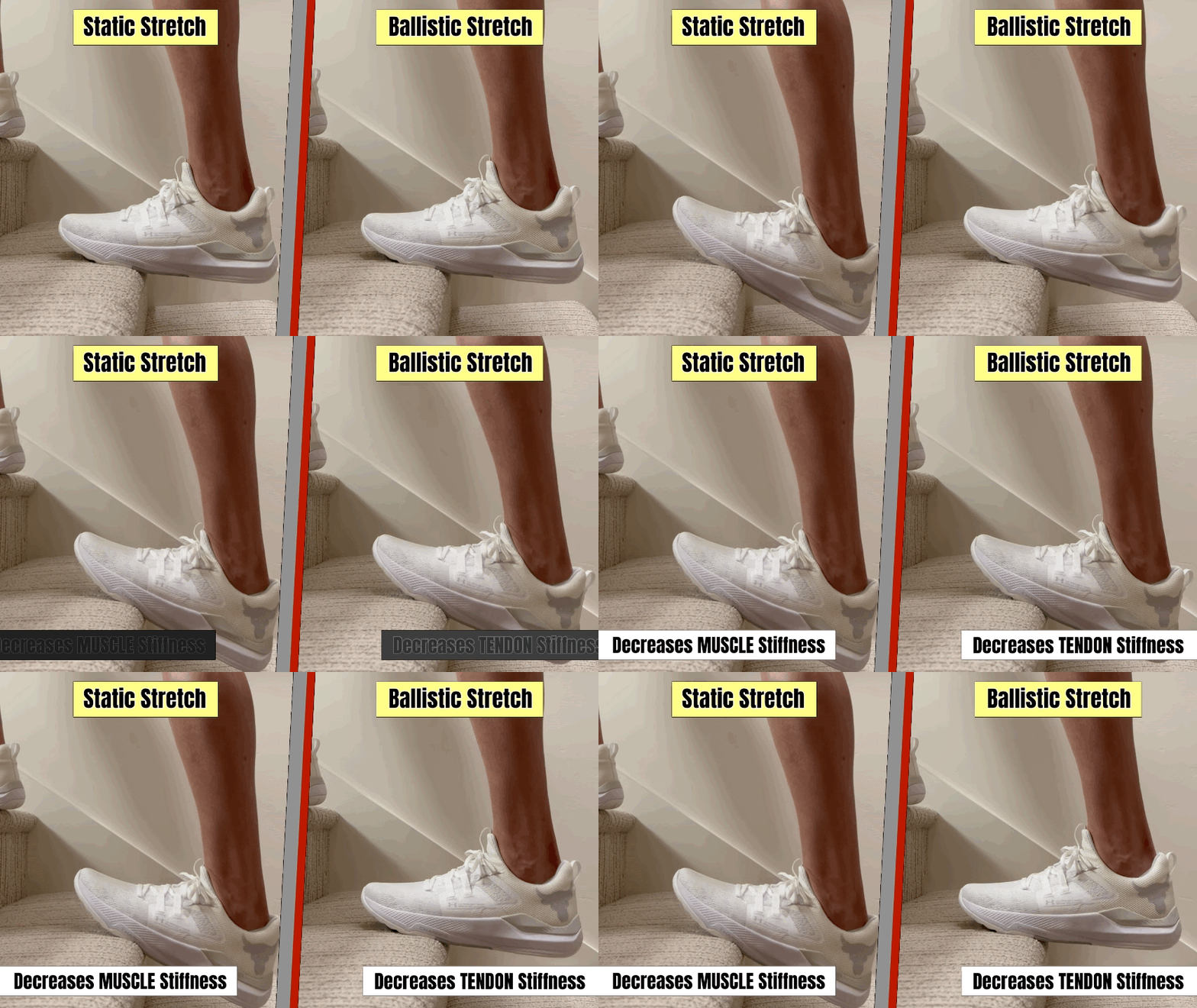
Great question! There are two primary methods or types of stretching: static, and ballistic. Static stretching is the “classic” method, and is what most people do exclusively. It involves slowly lengthening the muscles and then holding that stretched position (see GIF below – left side).
Ballistic stretching, on the other hand, involves using quick “bouncing” motions in and out of as deep of a stretch as you can safely get (see GIF below – right side). And the dynamic, bouncing nature of a ballistic stretch allows you to achieve a deeper stretch than you can get by slowly lengthening it.
And here’s the key!!
Studies have shown that static stretching is very effective for loosening muscle fibers, but DOESN’T loosen their tendons! While ballistic stretching is excellent at decreasing tendon stiffness, but NOT muscle fiber stiffness! Thus static stretching is best for increasing range of motion and preventing muscle belly tears, while ballistic stretching is best for tendon and joint injury prevention (which is actually where the vast majority of musculoskeletal injuries occur).
APPLICATION: You need to consistently include BOTH static AND ballistic techniques in your stretching routines to achieve all-around musculoskeletal flexibility benefits!
Relevant Research Article(s):
1) Effect of static and ballistic stretching on the muscle-tendon tissue properties
Related Dr. Gains YouTube Video(s):
1) EVERYTHING you NEED for BIGGER, HEALTHIER, & MORE DEFINED CALVES (Gastrocnemius) In 2 MINUTES! [2MM]
 Dr. Gains
Leave a comment