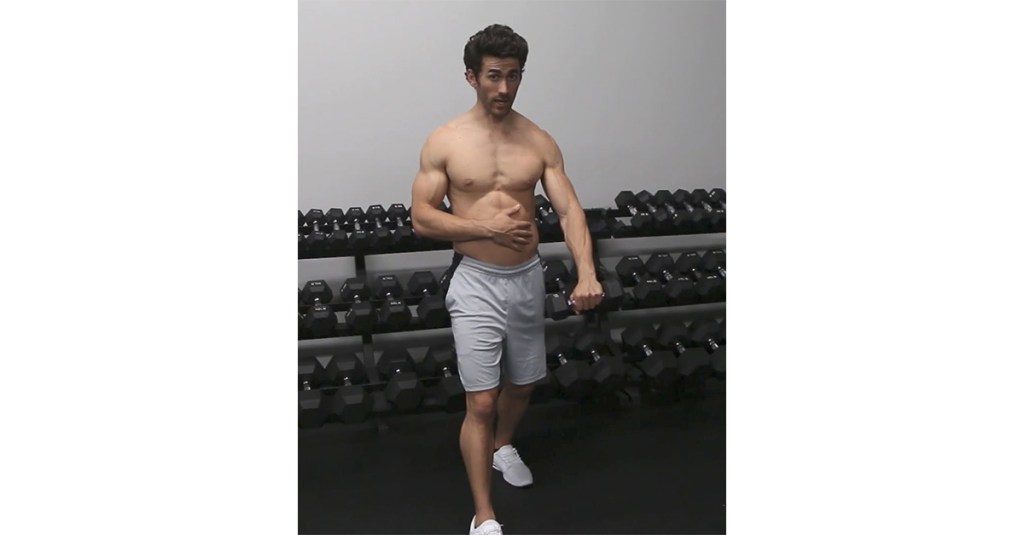

I very frequently see people at the gym doing front raises wrong. Or at the very least, they’re not effectively hitting what they think they are (the anterior [front] deltoid), and are putting their shoulder joint at risk of injury!
First, let me explain what the Good, Bad & Ugly form options are – although they’re probably more accurately named The Extremely Bad, The Okay, and The Best!
The Extremely Bad: Pronated Front Raises (palm facing down, see 1st pic below)
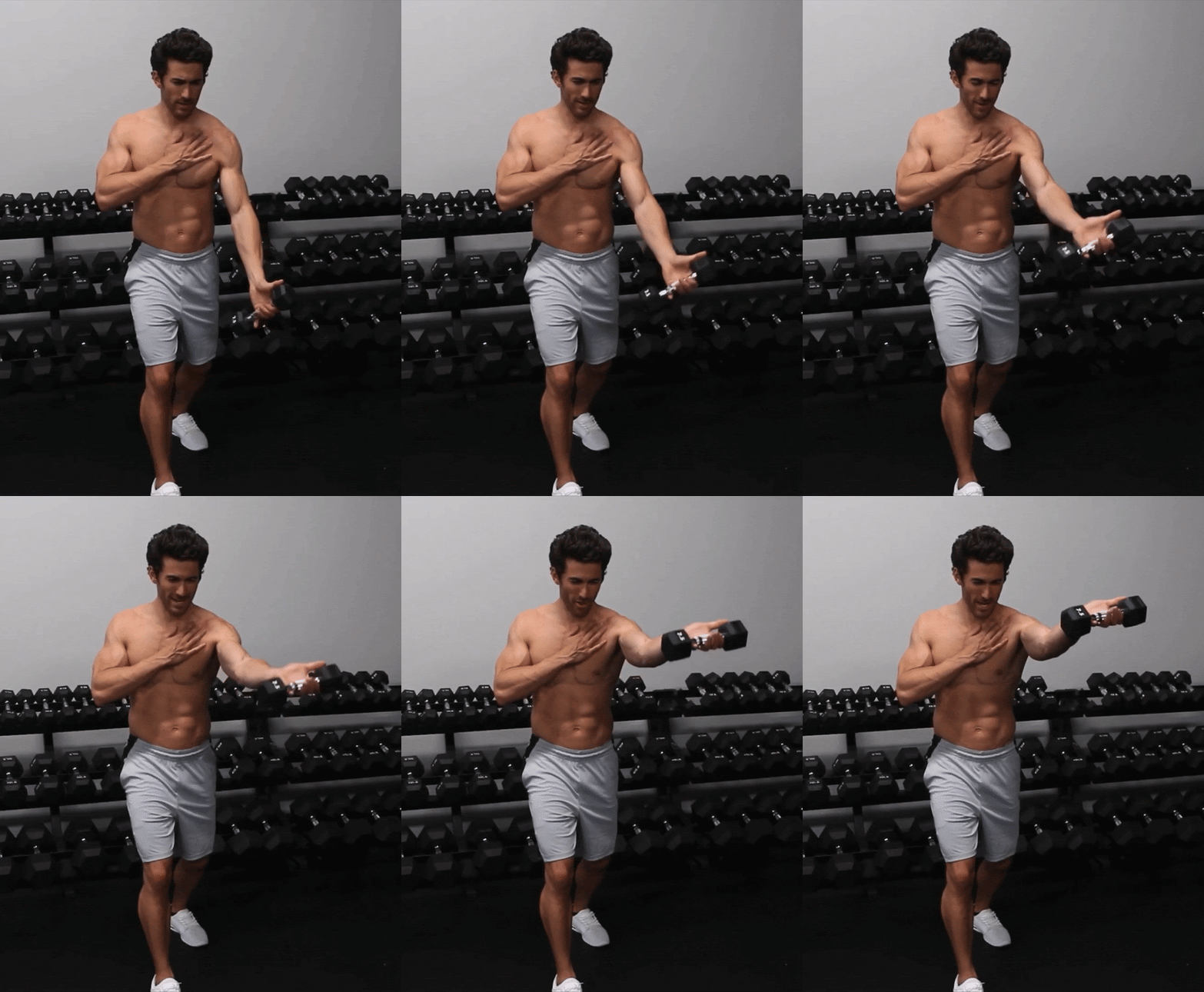
The Okay: Neutral Front Raises(palm facing in, see 1st GIF below)
The Best: Supinated Front Raises(palm facing up, see 2nd GIF below)
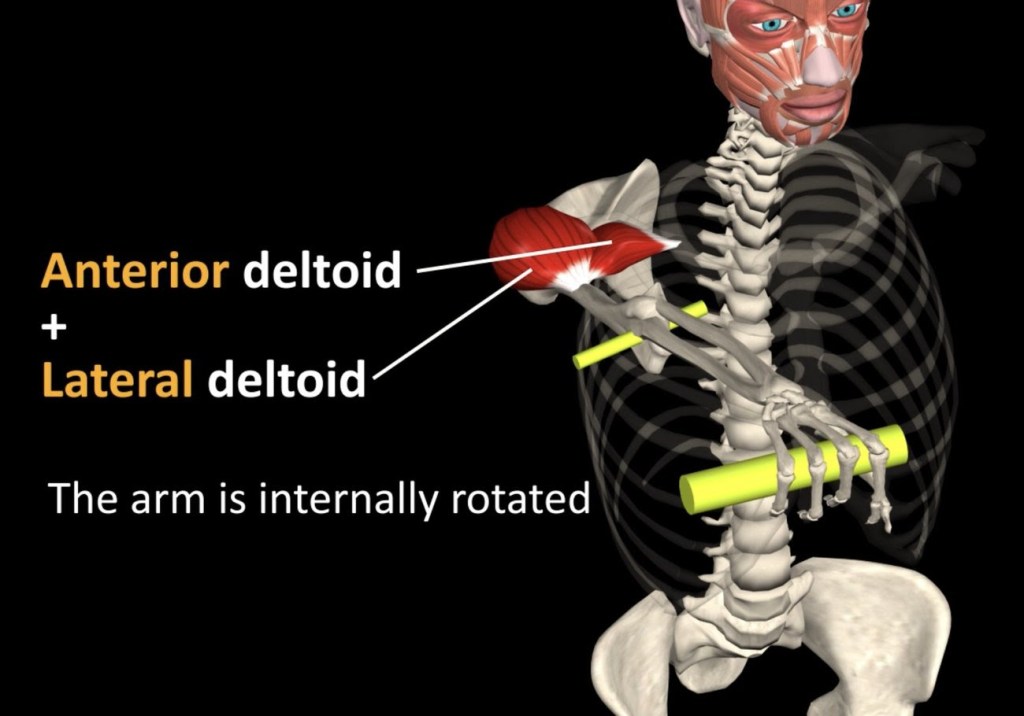
THE ANATOMY: In order to target the anterior deltoid, which is situated on the very front of the shoulder, with a front raise, the anterior deltoid needs to be ON TOP, so that it’s pulling directly up on the humerus! With a pronated forearm – and thus an internally rotated shoulder – you’re placing the lateral (side)deltoid on top, not the anterior! (see 2nd pic below) Even worse, flexing the shoulder forward while having the joint internally rotated is also a recipe for rotator cuff tears and impingement! With a neutral forearm, your shoulder is a little more externally rotated, so the lateral and anterior deltoid heads are pretty evenly spaced on top of the arm, and both pull up equally (see 3rd pic below), making it “okay” at hitting the anterior deltoid, and at least a lot more safe and healthy for the joint than the pronated version. However, a supinated forearm externally rotates the shoulder further, placing the anterior deltoid squarely on top (no pic), so that it’s the only deltoid head pulling up on the arm, making it by far the most effective front raise for working the anterior deltoid!!
APPLICATION: If you want to work the anterior deltoid with a front raise, do it with a supinated forearm (palm facing up) and externally rotated shoulder joint!!
Related Dr. Gains YouTube Video(s):
1)How to ISOLATE & BUILD ALL 3 DELTOID HEADS! (Part 2 – Everything you NEED to Know About Shoulders)
2)Why is Shoulder Pain in Lifting So Common?? (Principle of Internal & External Rotation Explained)
Relevant Research Article(s):
1)An Electromyographic Analysis of Lateral Raise Variations and Frontal Raise in Competitive Bodybuilders
The Extremely Bad (Pronated)

 Dr. Gains
Leave a comment